

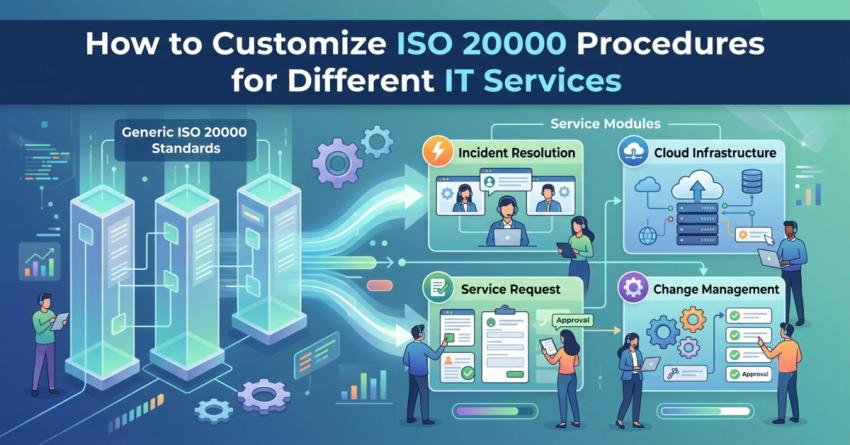
IT service providers manage activities such as incident resolution, system maintenance, service requests, network management, and infrastructure support. Each activity requires clear responsibilities, defined workflows, and appropriate controls. Customizing ISO 20000 procedures helps organizations align their IT service management system (ITSMS) with operational needs while meeting applicable ISO/IEC 20000-1 requirements.
Instead of applying generic procedures to every service, organizations should develop practical processes that reflect their service scope, risks, and customer expectations.
Why Customize ISO 20000 Procedures?
ISO/IEC 20000-1 establishes requirements for implementing, maintaining, and continually improving an IT service management system. However, IT services differ in complexity and business impact. A cloud service provider may prioritize availability and infrastructure monitoring, while an IT support company may focus on incident resolution and service requests.
Customized IT service management procedures clarify responsibilities, standardize activities, improve recordkeeping, and support consistent service delivery. They also help organizations apply relevant ITIL best practices without creating unnecessary documentation.
1. Identify Services and Documentation Requirements
Start by identifying the services covered by your ITSMS, such as help desk support, cloud hosting, software maintenance, or network management. Review customer expectations, service dependencies, operational risks, and existing workflows.
Next, compare current processes with applicable ISO 20000 documentation requirements. This gap analysis identifies missing procedures, unclear responsibilities, and opportunities to improve existing practices. It also helps determine which documented information and records are necessary to demonstrate effective implementation.
2. Customize Procedures for Key ITSM Processes
Each procedure should explain the activities to perform, responsible personnel, approval requirements, and records to maintain.
- Incident management procedure: Define how incidents are reported, prioritized, escalated, resolved, and closed. Critical services may require faster escalation and clear response targets.
- Change management procedure: Establish how changes are requested, assessed, approved, tested, implemented, and reviewed. High-risk changes may require additional authorization and rollback planning.
- Problem management procedure: Explain how recurring incidents are investigated, root causes are identified, and corrective actions are tracked to prevent repeated disruptions.
- Service request management: Specify request categories, fulfilment responsibilities, approval requirements, and completion records.
These workflows should reflect service complexity and risk while remaining consistent with applicable ISO 20000-1 requirements.
3. Define Responsibilities and Performance Indicators
Effective procedures identify process owners, operational teams, approval authorities, and escalation contacts. They should also specify records that demonstrate activities were completed as planned.
For example, incident records may include incident details, escalation history, resolution actions, and closure evidence. Change management records may include requests, impact assessments, approvals, test results, and implementation reviews.
Organizations should establish indicators such as incident resolution time, service availability, recurring incident frequency, and successful change rates. Monitoring these measures helps evaluate procedure effectiveness and identify opportunities for improvement.
4. Review and Maintain Procedures
Review procedures with employees responsible for using them. Test workflows against realistic scenarios to identify unclear instructions, unnecessary approvals, or missing responsibilities. Provide appropriate training and maintain document version control so teams use current instructions.
Review procedures when services change, new technologies are introduced, customer requirements evolve, or performance issues arise. Internal audits and management reviews help confirm that processes remain suitable and effective.
Simplify ISO 20000 Documentation
Preparing documentation from scratch can consume considerable time and resources. Organizations can use structured ISO 20000 documents as a starting point for developing their ITSMS documentation.
Review the available documentation package to determine whether its manuals, procedures, forms, and supporting materials suit your service scope. Adapt relevant content to your organization's workflows, responsibilities, and operational risks instead of adopting generic documents without review.
Conclusion
Customizing ISO 20000 procedures helps IT service providers establish consistent, practical processes. By identifying service requirements, tailoring workflows, defining responsibilities, and monitoring performance, organizations can improve service delivery and support conformity with ISO/IEC 20000-1. Well-maintained documentation also supports employee training, process monitoring, and audit preparation.