

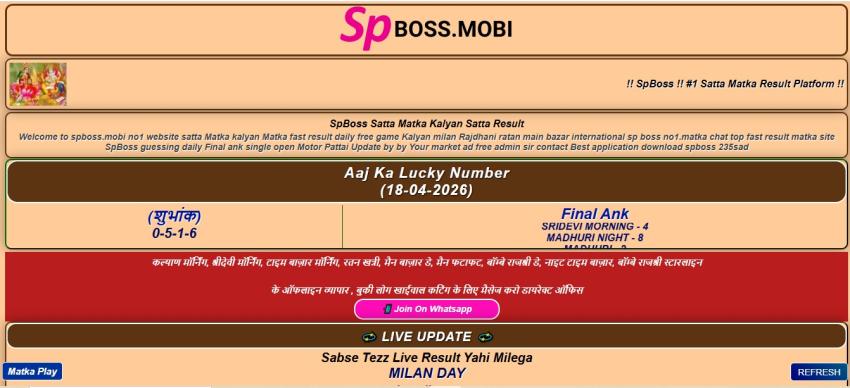
Historical number records help readers review results from previous dates. Many visitors search online for charts, number lists, and older result details. SP Boss is a website people may visit when looking for Satta Matka related records. Clear information can help readers find the entries they want.
The way a website displays records can affect how easily visitors read them. Date labels, chart headings, and organised tables can make searches simpler. Readers should also check whether the information is complete and up to date.
This article explains how historical number records can be presented on SP Boss and how readers can review them carefully.
1. Organising Records by Date
Dates play an important role in historical records. They help readers identify when a result was published. Without clear dates, visitors may confuse older entries with newer ones.
A date based layout allows readers to focus on a particular day. They can check the heading first and then review the numbers listed below it. This approach can save time when a website contains many records.
Visitors exploring SP Boss should check the available dates on each page. The current website may change its layout or record selection over time. Readers should confirm the displayed details instead of assuming every date is available.
2. Displaying Numbers in Charts
Charts can present historical information in a compact format. They allow readers to scan several entries without opening separate pages for every record.
A chart may use rows and columns to organise dates and number details. Headings help explain what each section contains. Consistent spacing can also make the displayed information easier to follow.
When reviewing SP Boss records, readers should look at the chart title and labels before reading individual entries. They should follow each row carefully to avoid mixing details from different dates.
A chart can improve access to past information. However, its format alone does not confirm that every entry is correct. Readers should look for clear publication details whenever possible.
3. Keeping Previous Results Available
Historical records are useful because they preserve information from earlier dates. Readers can return to these entries when they need to check a previous result or review an older chart.
A well organised archive groups related records together. This can help visitors move between dates without searching through unrelated content. Some websites may also provide links between current results and older records.
Readers should check which historical periods are covered on SP Boss. They should not assume that the website keeps a complete record of every past result. Missing dates and unclear entries should be treated with care.
4. Helping Readers Compare Records
Some visitors review more than one date at a time. They may want to check how records differ across several days. Clear formatting makes this task easier.
Readers can begin by selecting two dates and checking the entries separately. They should confirm that both records use the same labels and format. This reduces the chance of comparing unrelated information.
People searching for Satta Matka records should remember that previous results do not predict future outcomes. Similar numbers in older records do not prove that the same numbers will appear again.
Historical comparison is best used to review published information. It should not be treated as a reliable method for choosing future results.
5. Using Headings and Page Sections
Headings help visitors understand what a page contains. A clear title can identify a chart, date range, or result category. Smaller section headings can then guide readers to specific details.
SP Boss visitors should read the page heading before using any displayed record. They should also check nearby notes for publication dates or other useful details.
If a heading is unclear, readers should avoid guessing what the numbers represent. A well labelled record is easier to review than a page with missing descriptions.
Simple navigation also helps visitors move between different sections. Clear links can reduce confusion and make historical searches more convenient.
6. Checking Accuracy and Updates
Historical information should be reviewed carefully before readers rely on it. An old chart may remain online even when newer records are available. A page may also contain missing details or unclear dates.
Readers should check the publication date and any available update notice. When possible, they can compare the information with a reliable original source. If the details conflict, they should avoid treating either record as confirmed without further checking.
Visitors should also browse carefully and avoid sharing sensitive personal or banking information with unverified websites.
Conclusion
SP Boss is a website readers may explore when searching for historical number records and Satta Matka related information. Dates, charts, headings, and organised sections can make past entries easier to review. However, the exact records and features available should be checked on the current website.
Readers can improve their searches by confirming dates, following chart labels, and checking unclear details. They should remember that historical records describe past results only. They cannot guarantee future outcomes.
Careful browsing helps visitors read online information more clearly and avoid common mistakes when reviewing historical number records.